
Cannabis for Health
Sativa vs Indica for Sleep: What Actually Matters
Nov
Most shoppers are told to pick indica for bed and sativa for the morning. It is a handy rule, and the research shows it is only a starting point. Indica is the usual first pick for evening use, but the label tells you less than the product’s THC and CBD numbers, the format and your dose. Here is how to read those details and choose with more confidence.
TL;DR
- Indica is the traditional bedtime pick and sativa the daytime one, but a 2026 systematic review found these labels are not reliable guides to chemistry or effects.
- Look at the lab-tested THC and CBD numbers, the terpene information if listed, the format and your dose before you look at the label.
- Health Canada’s guidance says low THC doses appear to help with falling asleep, while high doses appear to disturb sleep.
- Vapes act fast and fade sooner. Edibles act slowly and last longer. Match the format to your sleep problem and start low.
- Insomnia that lasts weeks deserves a conversation with a doctor or pharmacist, whatever you use.
Table of Contents
- What indica and sativa are supposed to mean
- Why the label is a weak guide
- What to look at instead
- Vape, edible or flower: how the format changes your night
- Our perspective
- How to try cannabis for sleep more safely
- What the clinical evidence says about cannabis and insomnia
- When to talk to a professional
- Shop for evening products at Toke Club
- FAQ
- Sources
What indica and sativa are supposed to mean
The popular shorthand is simple. Indica is described as relaxing and body-focused, sativa as energizing and head-focused, and hybrids as something in between. That is why the pages ranking for this search almost all say the same thing: indica for sleep, sativa for daytime. If you want the full background on the two names, we cover it in our guides on the difference between indica and sativa and indica vs sativa strains.
The shorthand has a real basis in experience. In a Canadian naturalistic study of people using cannabinoids for insomnia in daily life, predominantly indica strains were perceived to reduce insomnia symptoms more than predominantly sativa strains and than CBD strains. The authors stress that this is self-reported and that randomized, placebo-controlled trials are still needed.
So when someone says indica helps them sleep, they are describing something real to them. The question is whether the word “indica” on a package is what causes it.
Why the label is a weak guide
A 2026 systematic review in the Journal of Cannabis Research looked at 28 peer-reviewed reports. It concluded that indica, sativa and hybrid labels are not reliable guides to composition or therapeutic effects. Labels showed limited agreement with genetics or major cannabinoid profiles, and links with human outcomes, including insomnia relief, were inconsistent.
The Canadian study above points to a practical reason: there are no standardized methods for verifying strains or content in commercial products, and earlier work has found mismatches between labels and what is inside.
What does that mean for you? Two products both marked indica can feel very different, and a product marked hybrid may suit you better than either. The label is a hint about tradition and marketing. The numbers on the package are the real information.
What to look at instead
The same review suggests more defensible descriptors: measured chemistry, product form, route of use, dose and your own safety considerations. Here is how to apply them.
THC: the dose matters more than the strain name
Health Canada’s guidance for health care professionals says human experimental data suggest THC has a dose-dependent effect on sleep. Low doses appear to shorten the time to fall asleep and increase slow-wave sleep and total sleep time, while high doses appear to cause sleep disturbances.
That is the most useful single idea for a bedtime shopper: more is not better. A strong product taken late can leave you groggy, anxious or restless instead of rested. Health Canada also lists drowsiness, dizziness, anxiety and impaired memory and attention among common immediate side effects.
CBD and CBN
CBD is not intoxicating and not addictive, according to Health Canada’s consumer information, though it still has effects. A 2026 systematic review and meta-analysis reported that CBD doses of 50 to 300 mg and CBN doses of 20 to 100 mg were safe and effective for improving sleep in its analysis, while formulations containing THC did not show a significant improvement and had more adverse-effect reports.
A separate 2025 meta-analysis of six randomized trials found cannabinoids were associated with better subjective sleep quality, with the improvement driven by formulations that were not exclusively CBD. The authors call for cautious interpretation because results varied widely and objective measures did not improve significantly.
Taken together, the evidence is mixed rather than one-directional. That is a good reason to treat your first few nights as a personal experiment: low dose, one change at a time, a written note of how you feel.
Terpenes
Terpenes such as myrcene and linalool are often credited with the sedating character of indica-type products. The evidence is still preliminary, as the 2026 review notes. If a product page lists terpenes, use it as one more clue, not a promise.
Vape, edible or flower: how the format changes your night
Health Canada’s consumer table gives the timing differences. Inhaled cannabis, whether smoked or vaped, starts within seconds to minutes and lasts about 2 to 4 hours. Ingested cannabis starts in 30 minutes to 2 hours and lasts 4 to 8 hours. Some lingering effects can last 12 to 24 hours for either route.
| Format | Onset | Typical duration | Best suited to | Main thing to manage |
|---|---|---|---|---|
| Vape | Seconds to minutes | 2 to 4 hours | Trouble winding down, easy to adjust a little at a time | Potency of concentrates, inhalation habits |
| Edible | 30 minutes to 2 hours | 4 to 8 hours | Staying asleep through the night | Delayed onset, so waiting before taking more |
| Flower | Seconds to minutes when smoked | 2 to 4 hours | Those who like to choose by strain and aroma | Smoke is hard on the lungs |
If you are considering a vape
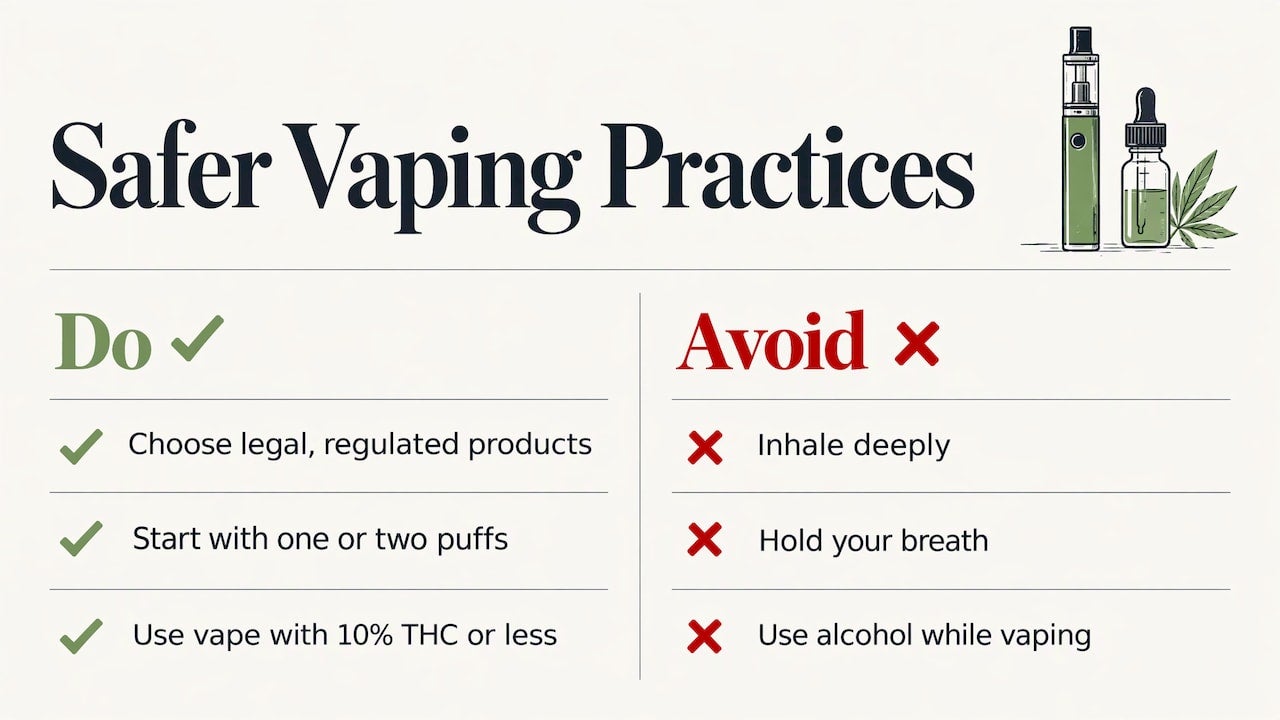
A vape is quick, which is why people searching for a THC or weed vape for sleep like it. Canadian public health bodies are clear about how to use one more safely. The Council of Chief Medical Officers of Health says people who choose to vape should use products from legal, regulated sources only, start with one or two puffs of a vape with 10 percent (100 mg/g) THC or less, avoid deep inhalation and breath-holding, and avoid alcohol while using cannabis.
The Canadian Centre on Substance Use and Addiction (CCSA) adds that most cannabis vapes use concentrates with high THC levels, and that stronger products raise the risk of over-intoxication. The same report links severe lung illness to unregulated vape products. Choosing from a licensed, regulated source is part of using a vape well. Our vape selection is where to compare options.
If you are considering edibles
Gummies and other edibles suit people who wake in the night, because the effect lasts longer. The catch is the delay. The CCMOH notes that delayed onset can lead people to take too much, so wait for the full effect before taking more. Because the effects last longer, a late dose can also mean a slower morning. Our guide on how long edibles stay in your system explains the timeline.
Our perspective
We sell cannabis to Canadian adults, and the question we hear most from new customers is simply: which one should I get for bed? Our honest answer is to start with the format and the dose, and treat indica as a sensible first filter rather than a guarantee.
The research backs this approach. Labels vary, but a product’s THC and CBD content, its format and how much you take are things you can read and control. That is why we encourage customers to look at the numbers on each product page, and to compare across our flower, edible and vape categories rather than shop by one word.
We also think the best bedtime product is the one you can use calmly and consistently at a low dose. Our loyalty program credits make it easier to try a different format or strength without starting over, and our wide selection means you can find a low-THC option or a balanced one in the same order. Many customers begin with an indica-leaning flower or an edible, note how they feel, and adjust from there.
Cannabis is for adults of legal age, used in a way that suits your body and your schedule. If your sleep is not improving, that is useful information too, and a doctor can help you work out why.
the author
How to try cannabis for sleep more safely
These steps pull together guidance from Canadian public health bodies.
- Check your legal age and source. Buy only from legal, regulated sellers. If you need a reminder, see the legal age to buy cannabis in Canada.
- Pick a low-strength product. CCSA’s Knowing Your Limits guide advises lower THC content or a higher CBD-to-THC ratio and, if you inhale, no deep inhalations or breath-holding.
- Match format to your problem. Trouble falling asleep points toward a faster format taken in small amounts. Waking at 3 a.m. may suit an edible taken earlier in the evening.
- Start small and wait. Take a little, wait for the full effect, and only then think about more. For vapes, CCSA’s infographic suggests starting with no more than 10% THC.
- Keep a simple log. Note the product, dose, time, how long you took to fall asleep and how you felt in the morning.
- Keep use occasional. CCSA suggests limiting use to occasional, such as once a week, and notes that regular high-strength use can lead to tolerance and dependence. Chronic THC use also leads to habituation to its sleep-enhancing qualities, per a 2023 review cited in the research.
- Skip alcohol and avoid driving. Alcohol with cannabis raises risk, and effects can linger well into the next day.
What the clinical evidence says about cannabis and insomnia
The full picture is more cautious than the shelf talk, and it helps to know it. A Cochrane review with evidence current to April 2025 found that medical cannabis may have little to no clinically meaningful effect on sleep quality, total sleep time or daytime functioning in adults with insomnia, with uncertain evidence and slightly more unwanted effects.
A 2022 review in SLEEP found improvements in some trials, with subjective sleep quality often better but no gain on lab tests of sleep architecture. Headache, sedation and dizziness occurred more often at higher doses. Health Canada’s guidance notes limited evidence that certain cannabinoids may improve sleep for patients with sleep disturbances linked to some chronic conditions.
What to do with that: judge by your own results, keep doses modest and stay attentive. The Cannabis Evidence clinician brief reports that nearly two-thirds of people who used cannabis for sleep said sleep got worse when they cut back, which is a reason to keep use occasional and notice any pattern early.
When to talk to a professional
If you have had trouble sleeping most nights for several weeks, see your doctor or pharmacist. Sleep problems often have causes that can be treated directly, such as stress, pain, sleep apnea, medications or caffeine timing. The clinician brief notes that proper evaluation of sleep problems and connecting people with effective treatment can improve sleep and lower the chance of cannabis-related problems.
Talk to a health professional before using cannabis if you are pregnant or breastfeeding, take other sedating medicines, or have a history of anxiety, psychosis or substance use problems. Health Canada lists anxiety, paranoia and, rarely, psychotic symptoms among side effects. Our article on cannabis and mental health goes further.
Shop for evening products at Toke Club
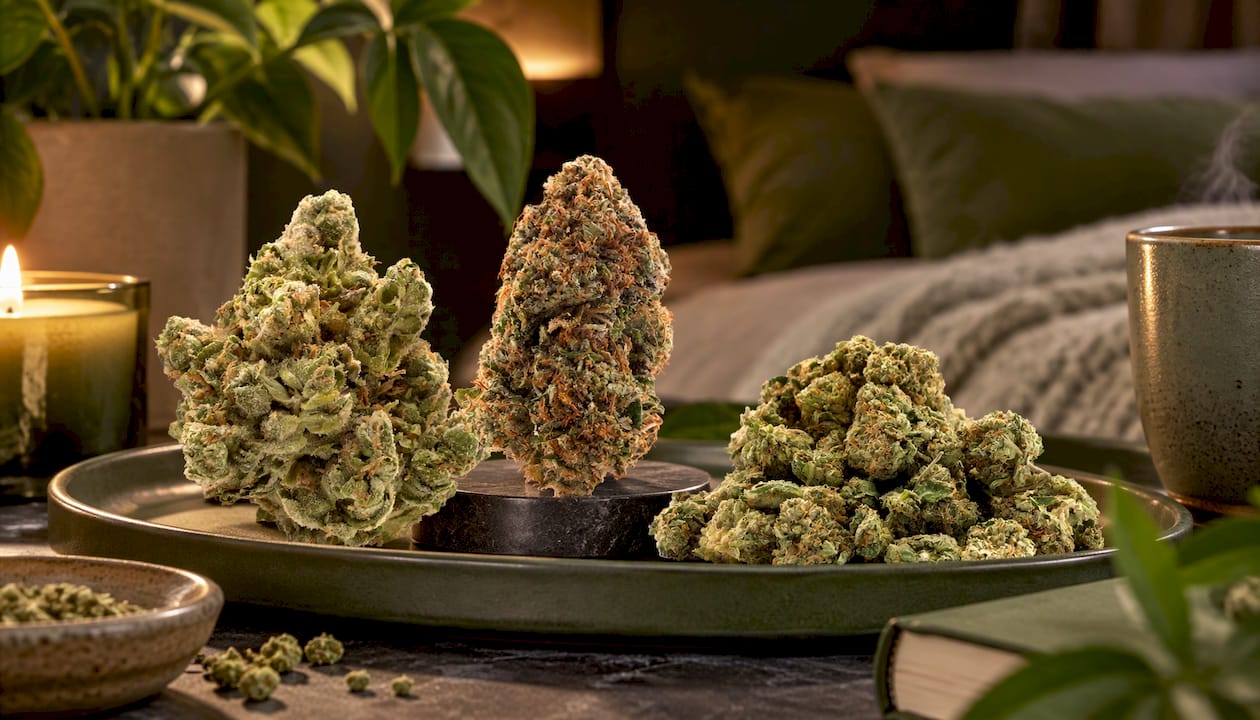
If you are ready to compare, our flower category includes strains such as Pre-98 Bubba Kush and Master Kush (smalls). You can also browse edibles and vapes for other formats. We ship across Canada, and you earn loyalty credits on purchases. For a quick look at the whole range, start at our online shop.
For more strain ideas, read our list of the 5 best weed strains for sleep.
FAQ
Is indica or sativa better for sleep?
Indica is the traditional choice, and in one Canadian survey-style study, people rated predominantly indica strains higher for reducing insomnia symptoms. However, a 2026 systematic review found labels are not reliable predictors of effect. Check the THC and CBD content and start with a low dose.
Is it bad to take edibles every night to sleep?
Health Canada notes that THC has addictive potential, and CCSA says regular high-strength use can lead to tolerance and dependence. Cannabis Evidence reports that consistent use can lead to withdrawal symptoms, including poor sleep. If you notice you need more to get the same effect, take a break and speak with a health professional.
Can a THC vape help with sleep?
A vape acts within seconds to minutes and fades after about 2 to 4 hours, so some people use it to wind down. Use a regulated product, take one or two small puffs of a 10% THC or lower product, and avoid deep inhalation. Public health bodies say the safest approach is to avoid vaping cannabis extracts altogether.
Does weed help with insomnia?
The evidence is mixed. A Cochrane review found little to no clinically meaningful effect for adults with insomnia, while other meta-analyses show better subjective sleep quality in some cases. Persistent insomnia should be assessed by a doctor.
Sources
- Do consumer-facing Indica, Sativa and Hybrid labels reliably guide cannabis effects? (Journal of Cannabis Research, 2026)
- The Use of Cannabinoids for Insomnia in Daily Life (PMC)
- Cochrane: medical cannabis for insomnia and sleep problems
- Health Canada: cannabis and cannabinoids for health care professionals
- Health Canada: consumer information on cannabis
- Cannabis dosing and administration for sleep: a systematic review (SLEEP, 2022)
- Effectiveness of cannabinoids on subjective sleep quality (meta-analysis, 2025)
- Medical cannabis for treatment of insomnia in adults (PubMed)
- CCMOH statement on cannabis extracts, edibles and topical products
- CCSA: Understanding Substance Use, Educator’s Guide
- CCSA: Knowing Your Limits with Cannabis
- CCSA: Cannabis, Inhaling vs Ingesting
- Cannabis Evidence: Cannabis and Sleep
Recommended
- Sativa vs Indica: Exploring the Contrasting Effects and Characteristics
- Indica vs Sativa Strains: Unveiling the Differences
- What is the Difference Between Indica and Sativa?
- 5 Best Weed Strains for Sleep