
Cannabis for Health
Outdoor-Grown Cannabis in Canada: What It Is and How to Buy It
Nov
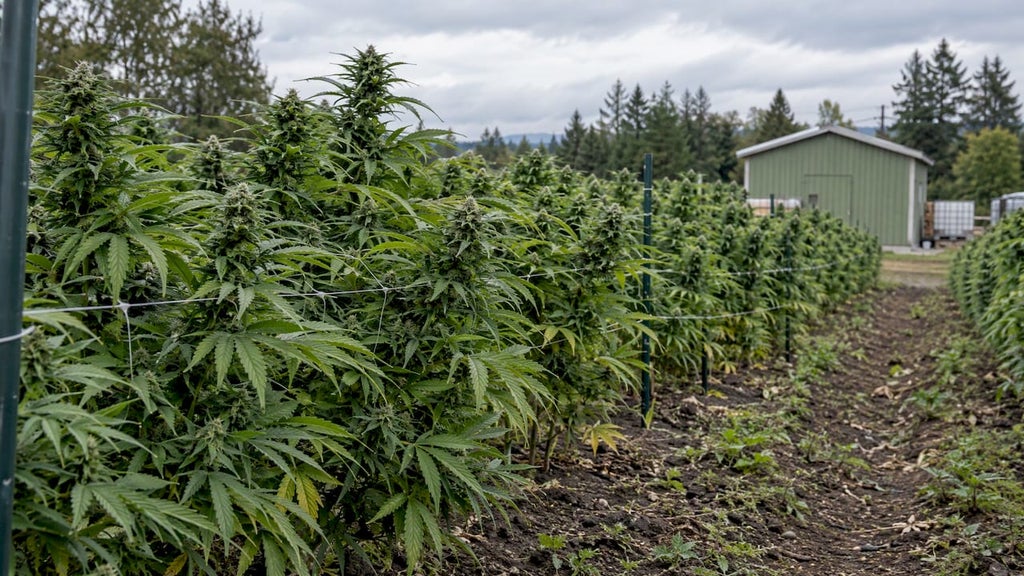
Outdoor-grown cannabis is flower raised in open fields or yards under natural sunlight, in a season that runs roughly May to September in most of Canada. A 2023 peer-reviewed comparison found sun-grown samples carried more terpenes, the compounds behind aroma and flavour, than genetically identical samples grown indoors. If you want to know what you are buying, this guide covers how outdoor flower differs from indoor and greenhouse flower, what to look for on a label, and where to find a wide range of flower in one place.
TL;DR
- Outdoor-grown cannabis uses natural sunlight and soil. Indoor uses lights, fans and a controlled room. Greenhouse sits between the two.
- A 2023 study of genetically identical plants found more terpenes, especially sesquiterpenes, in sun-grown flower.
- Outdoor growing costs far less, which is why outdoor flower trades at much lower wholesale prices than the average dried flower.
- Judge any flower by its lab results, harvest date, aroma and appearance, not by the growing method alone.
- Our flower category lets you compare options by grade and size in one place.
Table of Contents
- What “outdoor grown” actually means
- Outdoor, indoor and greenhouse: the real differences
- What the science says about sun-grown flower
- How to choose outdoor-grown flower
- Outdoor flower beyond the jar
- Growing it yourself: what the rules say
- Why we sell flower by grade and category
- Where to find it
- FAQ
- Sources
What “outdoor grown” actually means
The term describes where the plant spends its life. Outdoor cannabis grows outside a house or other building, in containers or directly in the ground, using sunlight rather than lamps. The grower has little to no control over weather and pests, and the season is limited to May to September, according to the University of Saskatchewan’s gardening program.
That calendar matters to you as a buyer. Outdoor plants are typically harvested in the fall, so outdoor flower tends to arrive in a wave after harvest and curing, usually from October onward. Flower that is cured well keeps its character for months, but a fresh-harvest jar and a year-old jar are not the same product. Harvest or packaging dates on the label are worth reading.
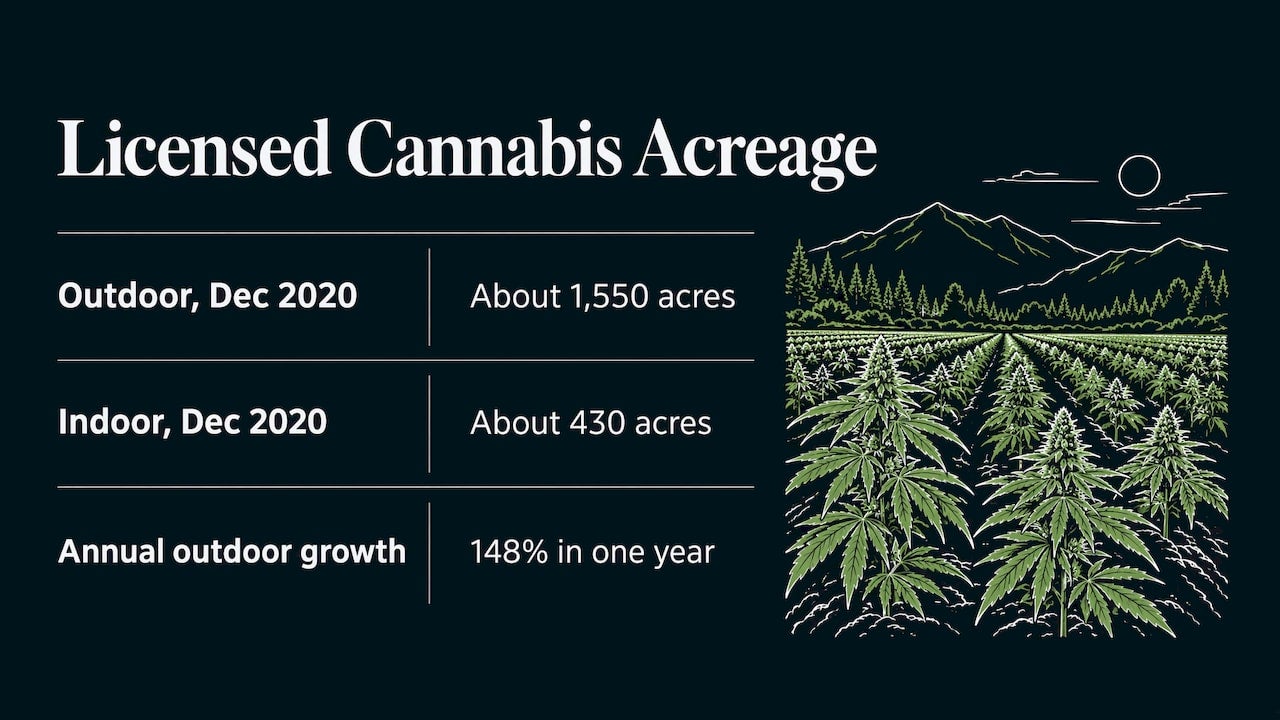
Outdoor cultivation also took off quickly in Canada after legalization. Commercial growing became legal through Health Canada in 2018, and by December 2020 about 1,550 acres of licensed cannabis was grown outdoors, against about 430 acres indoors, with outdoor field acreage up 148% in a year. Much of that growth went to oil extraction, which is why many concentrates and edibles start with outdoor biomass.
Outdoor, indoor and greenhouse: the real differences
Three growing methods cover almost all of the flower you will see.
| Outdoor | Indoor | Greenhouse | |
|---|---|---|---|
| Light | Direct sun, full season | Artificial lamps | Sun, often with blackout covers or supplemental lighting |
| Environment | Set by the weather | Fully controlled | Partly controlled |
| Harvests per year | One, in the fall | Several, year-round | One to several, depending on the setup |
| Cost to grow | Lowest | Highest | In between |
| Typical use | Flower, oil, extracts | High-end flower | Flower |
Indoor
Indoor growing happens in a dedicated space with lights, fans, timers, soil or other media and nutrients. It offers complete control of the environment and year-round growing, at higher cost. Indoor rooms are usually supplemented with carbon dioxide: the open air holds about 400 ppm, and indoor cannabis is typically raised at 800 to 1,200 ppm. Because the same room can run several cycles a year, most Canadian indoor production goes to the premium flower market, where consistency from batch to batch is the selling point.
Greenhouse
Greenhouse, or sun-grown with light deprivation, uses natural light under cover. Growers can pull tarps over the plants to shorten the day length and trigger flowering earlier than the outdoor calendar allows, which is how some producers fit more than one harvest into a year. It sits between the other two in cost and in control. If a label says “greenhouse” or “sun-grown,” you can expect sunlight with some environmental management.
Outdoor
Outdoor flower is the simplest to grow and the cheapest to produce. That shows up in the price: the September 2025 CCX Canadian Bulk Wholesale Cannabis Pricing Report, as summarized by CertiCraft, put the average third-quarter 2025 wholesale price of dried flower at $1.32 per gram, while outdoor-grown cannabis reached highs of just $0.42 per gram. These are wholesale figures between businesses, not retail prices, and they change each quarter. They show the cost advantage of growing under the sun.
What the science says about sun-grown flower
The most useful study for a buyer compared commercial cannabis grown in the sun with genetically identical plants grown indoors under artificial lights and artificial media. The 2023 paper, published in a peer-reviewed journal, reported that sun-grown samples had less oxidized and degraded cannabinoids and more terpenes, both in quantity and in type, particularly sesquiterpenes.
In plain terms:
- Terpenes are the aromatic oils in flower. They shape smell and taste, from citrus and pine to earthy and peppery.
- Sesquiterpenes are a heavier family of terpenes, often linked with spicy, woody or herbal notes.
- Cannabinoids such as THC and CBD are the compounds most people look at first. In the same study, CBGA and CBDA levels were relatively similar between the two methods, CBCA appeared slightly higher in outdoor plants, and THCA was slightly lower.
Two takeaways follow. First, a lower THC percentage on a label does not make a flower less interesting: aroma and flavour depth come from terpenes too. Second, outdoor plants produced a greater diversity of aromatic compounds from the same genetics, which is the case for trying sun-grown flower if you care about flavour.
The researchers did not set out to tell you which method is “best.” Quality depends on the cultivar, the region and the grower’s care. Some Canadian regions and some regions around the world, as the University of Saskatchewan notes, produce outstanding outdoor-grown cannabis.
How to choose outdoor-grown flower
A good choice comes down to a few things you can check before you order.
- Look at the lab results. Licensed producers must test for pesticide residues before cannabis reaches consumers. Health Canada’s requirements cover fresh or dried cannabis, and that testing matters especially for field crops, since cannabis takes up chemicals from its surroundings. A pesticide drift from a neighbouring conventional crop can make outdoor cannabis unsaleable, which is one reason batch testing exists.
- Check the terpene profile when it is listed. If you are drawn to outdoor flower for flavour, the terpene list tells you more than THC percentage does.
- Read the harvest or packaging date. Fall harvest means the freshest outdoor flower arrives in autumn and early winter.
- Inspect the flower. Look for intact, dense buds with a clear aroma, and no mustiness, which signals poor drying or storage. Seeds in the flower are a flaw. Hemp pollen can travel many kilometres and fertilize any Cannabis sativa plant, and the resulting seeds reduce the weight and quality of the end product.
- Match the grade to your budget. Higher grades usually mean denser, more trimmed buds. Our 28-gram AA assorted buds and AAAA assorted buds show two ends of that range.
If you are new to cannabis, start with a small amount, wait to feel the effect before using more, and avoid combining flower with alcohol. Cannabis is for adults of legal age only. If you take prescription medication or have a heart or mental health condition, speak with your doctor or pharmacist before you use it.
Outdoor flower beyond the jar
Because outdoor cultivation is cheap at scale, a great deal of it goes into products you may already use. The same economics that fuelled the outdoor boom in extraction mean that oils, budder, wax and other concentrates are often built on sun-grown plant material. If you prefer not to smoke, our edibles and vapes give you other ways to enjoy the plant, and our topicals are made for use on the skin.
Dose is where edibles and concentrates differ from flower. Edibles take longer to act than inhaled products, so wait before taking more. Concentrates are far more potent than flower by weight, so a small amount goes a long way.
Growing it yourself: what the rules say
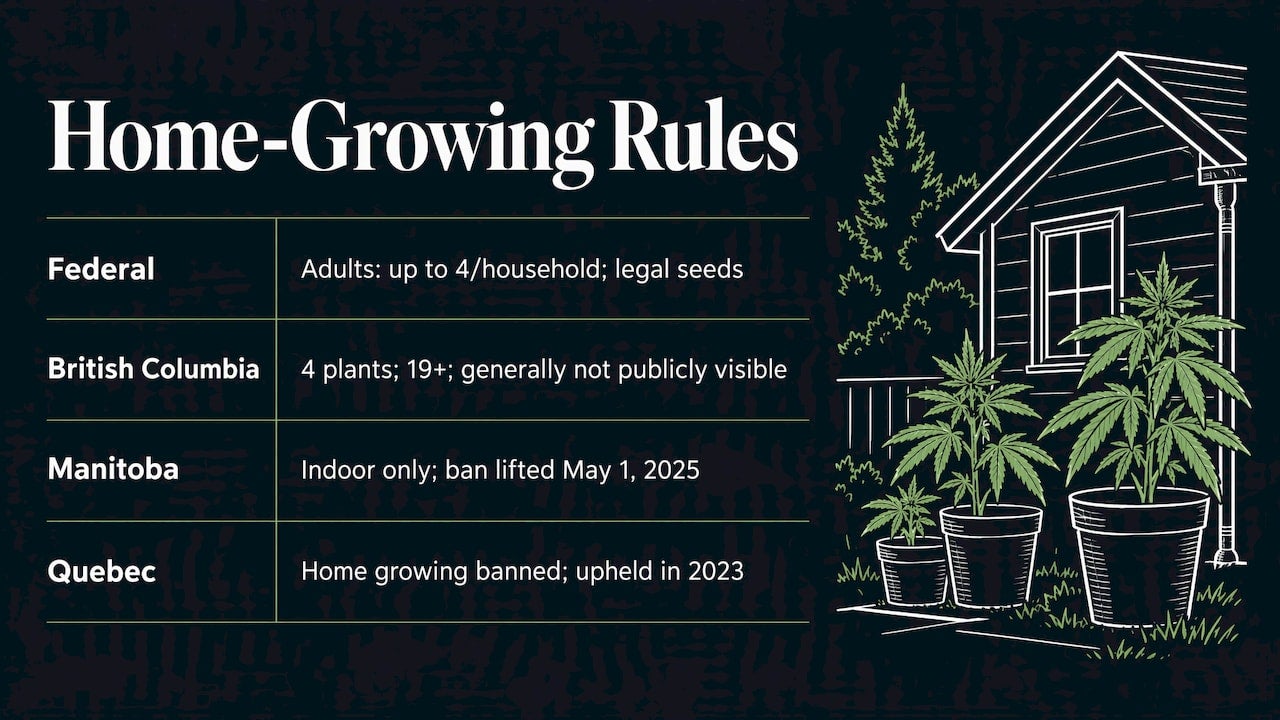
Most readers searching this topic want to buy, but a short word on legality helps. Under the federal Cannabis Act, adults of legal age may grow up to four plants per household for personal use from legally sourced seeds or seedlings. Provinces set their own rules on top: in British Columbia, adults 19 and older may grow up to four plants at home, including in a yard, on a deck or on a balcony, as long as the plants are generally not visible from a public place. Manitoba lifted its home-growing ban on May 1, 2025, but only for plants grown indoors. Quebec still bars home growing, and the Supreme Court of Canada upheld that ban in 2023.
A single season of four plants gives you one harvest, and the result depends on your climate, your soil and your luck with weather and pests. That is a lot of variation compared with choosing a finished, lab-tested product.
Why we sell flower by grade and category
Since 2018 we have focused on one job: making it simple for Canadian adults to find cannabis they can trust at competitive prices. Flower is the heart of that, and the sun-grown versus indoor question is one we hear framed as a contest. We see it as a choice about taste, budget and occasion.
The research points the same way. Sun-grown plants can express a wider range of aromatic compounds, and indoor rooms give growers a steady, repeatable result. Neither is the single right answer, which is why we offer flower in several grades and in sizes you can scale to how you use it, alongside concentrates, edibles, vapes and topicals.
We also want shopping to feel straightforward. Our loyalty program gives you credits on purchases and rewards for signing up, and we feature savings such as 25% off edibles prominently on the site, so you can see what you are saving before you check out.
the author
Where to find it
If you want to compare grades and categories in one place, start with our flower category. We are an online marketplace for Canadian adults, and flower sits alongside concentrates, edibles, vapes, topicals and accessories, so you can build one order around what you actually use. New customers get rewards for signing up, and purchases earn credits through our loyalty program.
If flower is not your preferred format, our concentrates and vape pens and cartridges are good places to begin.
FAQ
Is outdoor-grown cannabis as good as indoor?
It depends on the cultivar, the region and the grower’s care. A 2023 study of genetically identical plants found that sun-grown flower had more terpenes and less degraded cannabinoids than the indoor samples. Indoor growing offers more consistency from batch to batch, so each method has its own strengths.
When is outdoor cannabis harvested in Canada?
The outdoor season runs roughly May to September in places like Saskatchewan, with harvest and curing following in the fall. Fresh-crop outdoor flower therefore tends to reach shelves from October onward. Dates vary by province and weather.
Why is outdoor flower usually cheaper?
It needs no lighting, climate control or year-round facility costs. Wholesale reporting for the third quarter of 2025 showed outdoor-grown cannabis at highs of $0.42 per gram, against a $1.32 per gram average for dried flower overall. Retail prices also depend on grade, trimming and packaging.
What is greenhouse cannabis?
It is flower grown under cover with natural sunlight, often with blackout tarps or supplemental lighting to control the flowering schedule. It costs more to produce than a field crop and less than a fully indoor operation. It is often described as sun-grown on labels.
Can I legally grow cannabis outdoors at home?
Federally, adults of legal age can grow up to four plants per household. Provinces add their own rules: British Columbia allows outdoor plants that are not visible from public places, Manitoba allows indoor plants only, and Quebec bars home growing. Check your province’s current rules first.
Sources
- Indoor vs. Outdoor Growing, University of Saskatchewan Gardening
- Cannabis growing in Canada: An expanding market, Crops & Soils
- Comparison of the Cannabinoid and Terpene Profiles in Sun-Grown and Indoor Cannabis, PMC
- Canada’s Cannabis Crisis: Over-Taxation, CertiCraft
- Mandatory cannabis testing for pesticide active ingredients, Canada.ca
- Manitoba home-grow rule changes, CBC News
- Growing Cannabis at Home in Canada
Recommended
- Understanding the Legal Age to Buy Cannabis in Canada
- 7 Best Online Cannabis Shop Alternatives in Canada