Cannabis for Health
High Potency THC Vapes in Canada: What the Numbers Mean
Nov
A high potency THC vape is a cartridge or disposable that carries a much higher THC percentage than flower, often 60% to 90%. Choosing one well means reading beyond the headline number: the amount of THC per puff, the cannabinoid and terpene profile, the format and your own tolerance all matter. Toke Club, an online marketplace for Canadians since 2018, carries vapes in cartridge and disposable formats, and this guide shows how to pick among them.
TL;DR
- Vape oils commonly sit well above flower: Health Canada’s 2025/26 survey found users’ last vape product averaged 69% THC, and some products reach 99%.
- The percentage is not the dose. A single puff of a very concentrated vape can exceed the 5 mg THC benchmark researchers use as a standard dose.
- Health Canada advises that higher-THC products raise the risk of psychotic symptoms and dependence, so start low, go slow and keep use occasional.
- Read the label for total THC, CBD content, package size and the testing information before you buy.
- Adults only, and the legal age depends on your province or territory.
Table of Contents
- What counts as high potency in a vape
- Can a vape really be 60% THC or more?
- What Canadian rules say about vapes
- Safe use of high potency vapes
- How to read a THC vape label
- Choosing your format
- Our perspective
- Shop high potency vapes at Toke Club
- FAQ
- Sources
What counts as high potency in a vape
There is no official federal definition of “high potency” yet. A 2022 federal Expert Panel recommended creating one in its March 2024 final report, alongside stronger health warnings. So the label is a marketing and consumer term, not a legal category.
Here is how the numbers compare:
| Product type | Typical THC range | Source |
|---|---|---|
| Dried flower | Roughly 18% to 25% on labels | Colorado testing study, 2026 |
| Cannabis extracts | Around 60% typical, solid extracts above 90% | Hammond, 2019 |
| Vape pens and cartridges | 69% average in last-used products, up to 99% | Health Canada ICCS 2025/26 |
How do consumers themselves draw the line? In the same Health Canada study, participants on average called 56% THC “high.” Respondents aged 16 to 24 put the median threshold at 80%, versus 40% for those 35 and older. If you are newer to cannabis, treat anything above roughly 60% as strong, whatever the packaging says.
Can a vape really be 60% THC or more?
Yes. Quebec’s public health institute, the INSPQ, reports in its 2023 review of cannabis vape liquids that these liquids generally exceed 60% cannabinoids and go up to 98% THC. The Canadian Centre on Substance Use and Addiction notes that distillates can reach 99% THC.
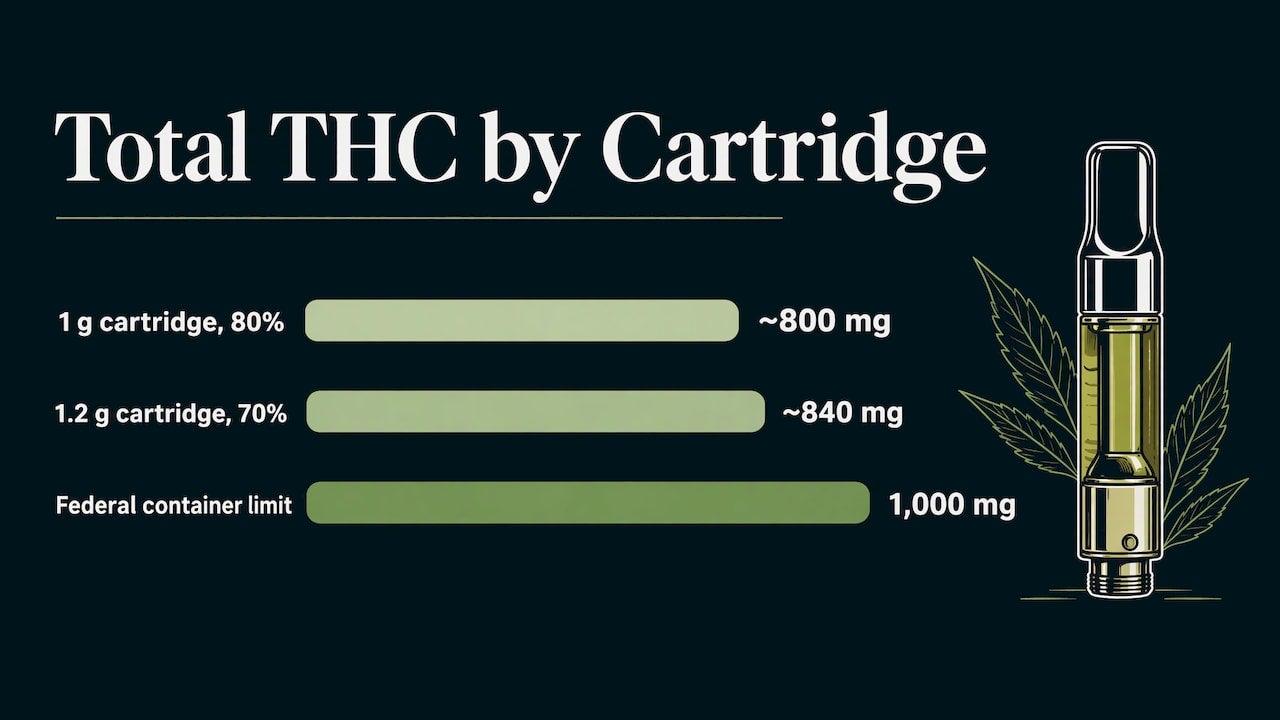
The same review gives the reason to look at dose rather than percentage. Researchers propose 5 mg THC as a standard dose, and one puff of a very concentrated vape can go beyond it. Health Canada’s survey found vape users averaged about 30 puffs on a use day from a cartridge averaging 1.2 grams. A 1 g cartridge at 80% holds roughly 800 mg of THC, so the puff count, not the percentage alone, determines how strong a session is.
A worked example
Take a 1 g cartridge labelled 80% THC. That is about 800 mg of THC in the oil. Federal rules cap extracts at 1,000 mg THC per immediate container, so this cartridge sits within the limit. Now compare a 1.2 g cartridge at 70%: about 840 mg. The second has the lower percentage but more total THC. Always multiply package size by percentage to compare products fairly. These are rough figures, since labelled and tested values can differ.
What Canadian rules say about vapes
Federal law treats a filled cartridge, the device and cannabis together, as a cannabis product. Health Canada’s composition guide says such products must not be contaminated or carry a characterizing flavour. It also limits an accessory that dispenses extract for ingestion-type routes to 10 mg THC per activation. The INSPQ summarizes the package limit for extracts as 1 g per package.
Provincial rules differ. According to the INSPQ’s legal review, Quebec is the only province capping THC at 30% w/w for non-edible products, including vape liquids. The same review notes that most provinces set the minimum age at 18 or 19, while Quebec raised it to 21 in January 2020. Confirm your province’s age and local rules before ordering. In March 2025, amendments to the Cannabis Regulations simplified packaging and labelling requirements for producers while keeping public health objectives.
Safe use of high potency vapes
The aim is a good experience, and with strong products that depends on dose control. Health Canada’s guidance on reducing risk says higher-THC products such as vapes raise the risk of psychotic symptoms, dependence and mood and anxiety disorders, and that long-term effects of vaping are still unknown. The INSPQ review adds that high-THC consumption is associated with a greater risk of psychotic symptoms.
Practical steps drawn from the Lower-Risk Cannabis Use Guidelines:
- Choose lower-THC products or a higher CBD-to-THC ratio when you can.
- Take one small puff, then wait before another.
- Avoid deep inhalation and breath-holding.
- Keep use occasional rather than daily or in binges.
The Canadian Centre on Substance Use and Addiction links high-strength products to dizziness, fatigue, headaches, stomach aches and coughing in its research summary. Vitamin E acetate, tied to much of the vaping-related lung harm evidence, is prohibited in licensed vape liquids in Canada. In the Health Canada survey, four in five users reported side effects such as dry mouth, drowsiness or red eyes.
People with a personal or family history of psychosis, anxiety disorders or dependence, and anyone pregnant or breastfeeding, should talk to a doctor before using cannabis. If you feel unwell after vaping, such as chest pain, severe confusion or trouble breathing, seek emergency care. Our piece on cannabis and mental health goes deeper.
How to read a THC vape label
A strong label check takes a minute and tells you more than the big number on the front.
- Total THC and package size. Multiply them to estimate total THC, as in the example above.
- CBD content. Federal rules do not cap CBD but require it on the label so you can choose informed. A product with some CBD can feel different from pure THC.
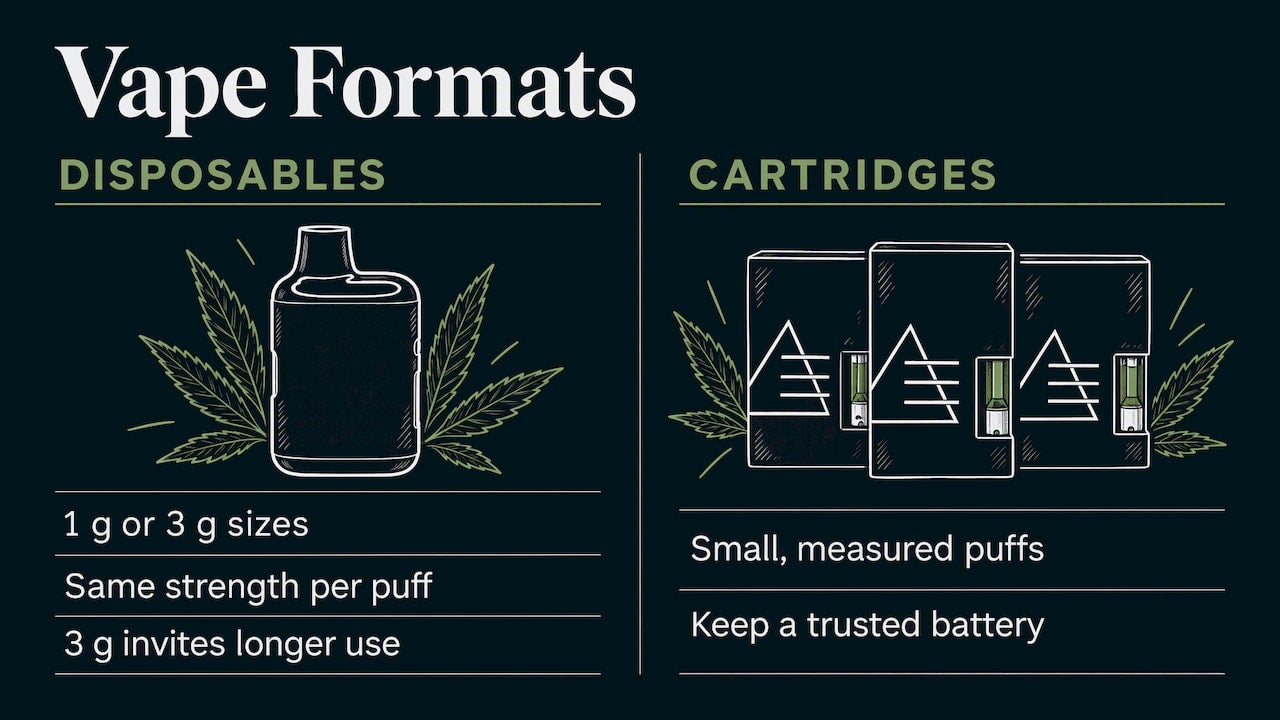
- Format. Disposables are all-in-one. Cartridges screw onto a separate battery, which lets you control the device. Our vape guide walks through each part of the label, and its section on vape types explains the formats.
- Accuracy. A study of 74 Colorado products found concentrate labels close to lab results (median 74.3% labelled versus 72.6% observed), while flower labels ran higher than observed. Percentages are a guide, not a measurement of your dose.
Researcher David Hammond has argued that consumers have little context for THC percentages, which is why dose thinking matters more than chasing the largest number.
Choosing your format
If you want a strong but manageable experience, size is your lever. A 1 g disposable and a 3 g disposable at the same percentage deliver the same strength per puff, but the larger one invites longer use. Cartridges suit people who want to take small, measured puffs and keep a battery they trust.
At Toke Club you can browse THC cartridges and disposables such as the Boost 1g disposable, the Elements 1.2g cartridge and the Atomic 3g disposable. If you prefer to compare inhaled products by type, our guide on concentrates versus flower explains the potency gap.
Our perspective
Strength is the first thing people ask about, and it should be the second. The first is how much you plan to take. We built our vape selection so that Canadians can compare cartridges and disposables by format and size, then choose the one that matches their experience level.
Our advice to new and returning users is the same: read the label, multiply percentage by grams, and begin with a single small puff. A strong product used carefully is a better experience than a stronger one used carelessly.
Since 2018 we have focused on making cannabis easy to find for Canadian adults, with a loyalty program that earns credits on purchases. Those who want potency can find it, and those who want guidance can start with our guides.
the author
Shop high potency vapes at Toke Club
If you have settled on a format, our vapes collection brings cartridges and disposables together in one place for Canadian adults, with frequent discounts and loyalty credits on purchases.
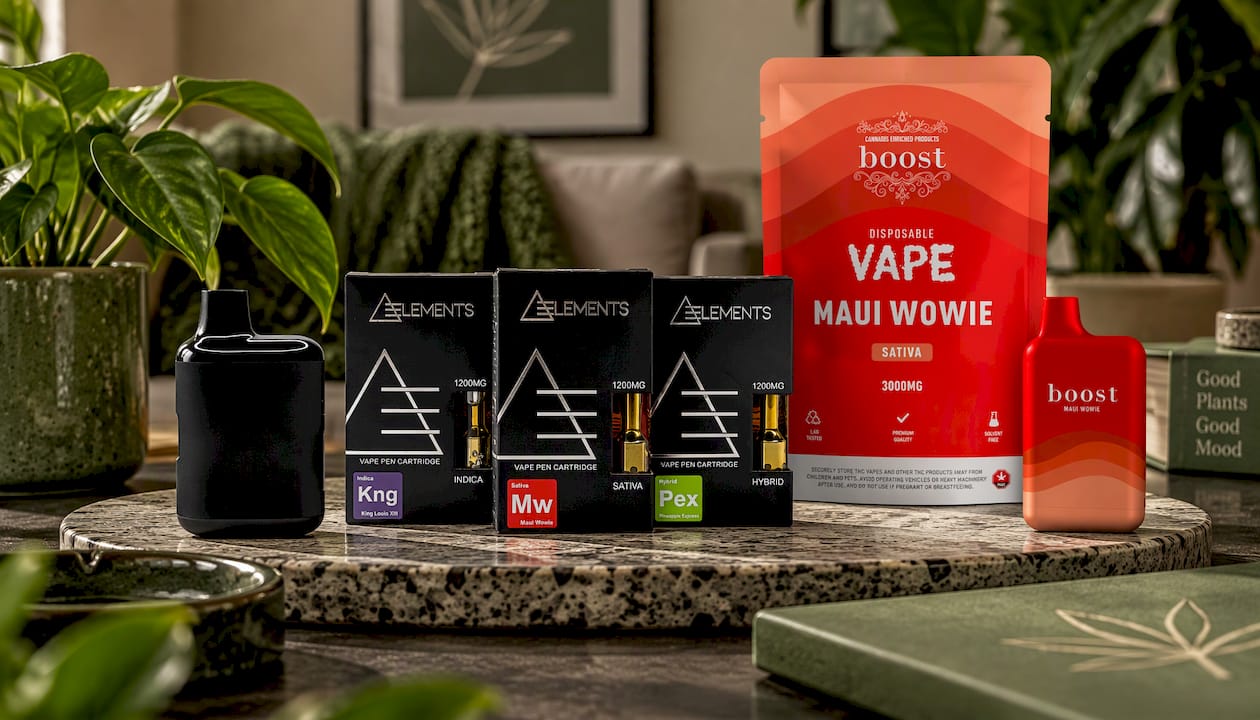
Prefer oils and extracts? See our cannabis concentrates as well.
FAQ
Is 60% THC possible in a vape?
Yes. The INSPQ reports that cannabis vape liquids generally exceed 60% cannabinoids and can reach 98% THC. Health Canada’s survey found vape users’ last product averaged 69% THC. Quebec is the exception, capping non-edible products at 30% w/w.
What is the strongest THC vape available in Canada?
Products can reach up to 99% THC according to Health Canada’s 2025/26 study. Strength per puff matters more than the top number, so compare package size and percentage together and choose a level that fits your tolerance.
Are THC vapes legal in Canada?
Yes, licensed vape cartridges are legal for adults. Filled cartridges are regulated as cannabis products, and the legal age is 18 or 19 in most provinces and 21 in Quebec. Quebec also has its own 30% THC cap for non-edible products.
How many puffs are too many?
There is no universal number. Researchers use 5 mg THC as a standard dose, and one puff of a very concentrated vape can exceed it. Take one small puff, wait, and stop at the first sign of dizziness or discomfort.
Sources
- Health Canada: 2025 Inhalable Cannabis Concentrates Study
- INSPQ: cannabis vape liquids review (2023)
- INSPQ: legal and regulatory framework for cannabis
- CCSA: Research (cannabis)
- CCSA: Closing the Gaps research summary
- Health Canada: composition requirements for cannabis products
- Health Canada: reducing your risk
- Health Canada: 2024-25 cannabis framework reporting
- Lower-Risk Cannabis Use Guidelines
- Hammond: Communicating THC levels and dose
- Commercial cannabis product testing study
Recommended
- THC Vape Guide for Canada: Types, Flavors, Legal Limits
- High Dose THC Edibles in Canada: What Counts and How to Use Them
- Concentrates vs Flower: Differences, Potency and How to Choose