
Cannabis for Health
Top Shelf Weed in Canada: What the Label Really Means
Nov
“Top shelf” is the best tier a seller carries, not an official grade. No Canadian authority certifies it, so the way to buy top shelf weed is to read the lab-tested facts on the package: total THC, terpenes, harvest or packaging date and the ingredient list. At Toke Club we sell premium flower, vapes, concentrates and edibles to Canadian adults, and we think shoppers do best when they judge a product on those facts instead of on adjectives.
TL;DR
- “Top shelf” is a menu position and a price tier, not a government grade. Health Canada sets testing, packaging and labelling rules but does not define it.
- Judge flower by total THC, terpene information, harvest or packaging date and how it looks, smells and feels, not by the word “premium” or “AAAA”.
- Legal products carry an excise stamp, a health warning box and the THC symbol. That is your first quality filter.
- For edibles and vapes, top shelf also means dose control: start low and go slow.
- Price tells you something about the tier, but a documented mid-priced product can beat an undocumented expensive one.
Table of Contents
- What top shelf weed means in Canada
- The legal baseline: what every real top-shelf product must show
- How to read a cannabis label like a pro
- Judging flower: what to trust and what to ignore
- What about price?
- Top shelf vapes, concentrates and edibles
- A short checklist before you buy
- Our perspective
- Where to start at Toke Club
- FAQ
- Sources
What top shelf weed means in Canada
The phrase comes from the shelf itself. The best, most expensive jars sat at the top, and the name stuck. Today it is slang. A slang glossary for Canadian shoppers describes it as the highest tier a seller offers, with the price to match.
The letter scales (A, AA, AAA, AAAA) are older still. They come from the days before legalization and have no legal definition. Health Canada regulates what must be tested and printed on a legal package, and none of those rules is a quality letter. Anyone who prints “AAAA” on a bag is using a marketing label, not a certification.
This matters because it changes how you shop. Since there is no official top-shelf standard, the useful question is not “is this top shelf?” but “what does this product’s label and lab result tell me?”
Top shelf versus exotic
The two words answer different questions. Top shelf describes where a product sits on a store’s menu. Exotic describes the flower: unusual genetics, a loud aroma, limited supply. Neither word has a regulatory meaning in Canada, and a product called exotic is not tested differently from any other, according to the same glossary. A strain can be top of the menu without being exotic, and an exotic with no documentation is just an expensive guess.
The legal baseline: what every real top-shelf product must show
Before you compare quality, confirm the product is a legal one. Health Canada’s guidance on choosing legal cannabis says legal products are quality controlled, tested for harmful contaminants and tested for THC and CBD accuracy, and they can be recalled. Illegal cannabis may contain heavy metals, pesticides, mould, cutting agents and bacteria.
A legal package shows:
- An excise stamp in the colours of the province or territory.
- A yellow box with a bilingual health warning.
- The standardized THC cannabis symbol.
- Child-resistant packaging (except for plants and seeds).
- For edibles, a nutrition facts table.
No amount of “top shelf” branding replaces these. If any are missing, skip the product.
How to read a cannabis label like a pro
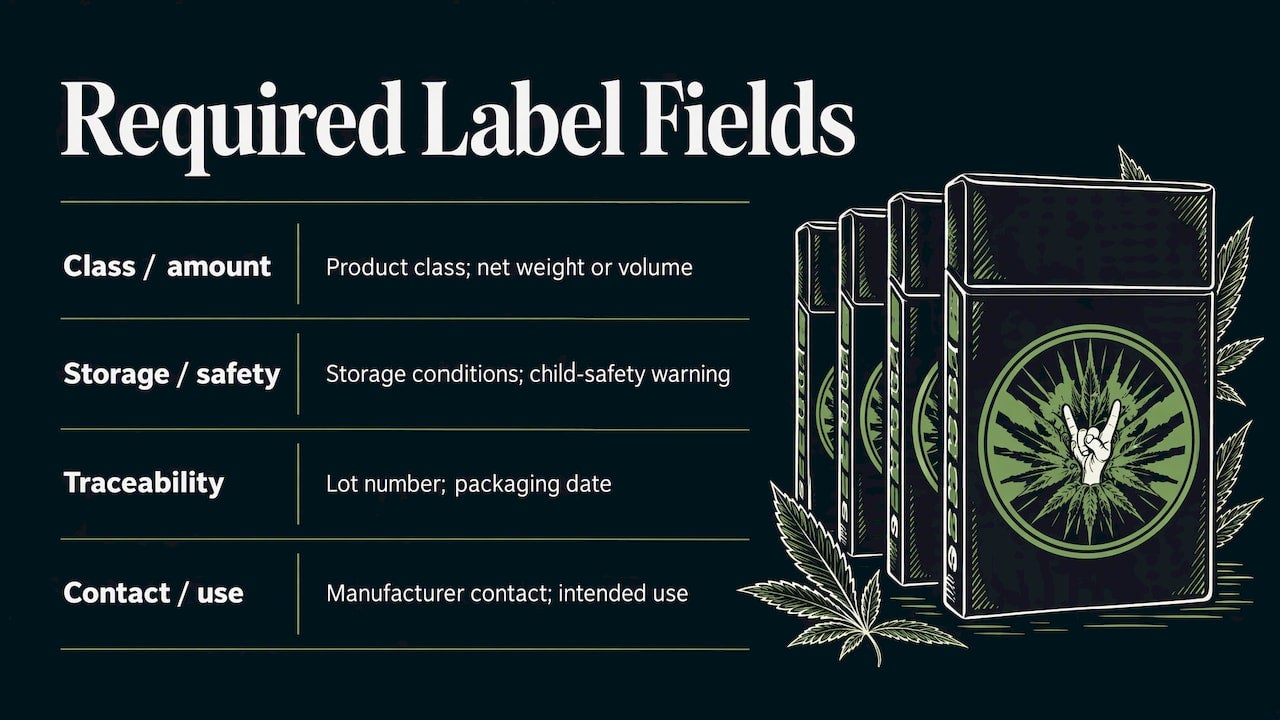
Health Canada’s guide to reading a cannabis label lists what must appear: the product class (dried, fresh, extract, edible, topical), net weight or volume, storage conditions, the “keep out of reach of children” warning, lot number and packaging date, manufacturer contact information and the intended use. Extracts, topicals and edibles also need a full ingredient list, in descending order of weight, and edibles and extracts list allergens.
Two details deserve extra attention.
Total THC and total CBD. Since the streamlining regulations came into force on March 12, 2025, labels only need to show total THC and total CBD, as set out in Health Canada’s summary of the changes. Older labels that show actual THC in bold could be used until March 12, 2026, and retailers can sell old-label stock indefinitely, so you may see both styles on the same menu. Total THC is the number to compare across products.
The date. The packaging date and lot number tell you how old the product is. Light, heat and oxygen can affect cannabinoids, and humid storage supports microbial growth, which is why a recent date and a sealed, properly stored package matter. The same 2025 changes allow QR codes and inserts, so some brands now put extra lab detail one scan away. Use it.
Judging flower: what to trust and what to ignore
Good flower is the product most people mean by top shelf weed, and it is the one where marketing language is thickest. Here is what holds up.
Signs worth weighing
- Aroma. Fresh flower smells distinct and layered when you open the jar. A flat, hay-like or musty smell points to age or poor storage.
- Structure. Dense, well-formed buds with intact trichomes (the tiny crystal-like glands) usually reflect careful handling. Crumbled, stemmy or over-dry flower does not.
- Moisture. Buds that spring back slightly when pressed are in better shape than ones that snap or feel damp.
- Terpene information. Terpenes are the aromatic compounds in cannabis. When a producer reports them, they tell you what the flower will smell and taste like. They are clues to aroma, not guarantees of effect.
- Harvest or packaging date. Newer is generally better.
Signs that mislead
No single number, look or marketing term proves quality. A guide to evaluating flower makes the point that high THC, a famous strain name or the word “craft” is not a standalone grade. A few specifics:
- THC alone. A higher number does not make a better product. It makes a stronger one. Beginners often do better with moderate THC and a good terpene profile.
- Strain names. A name tells you the lineage the grower claims, not how that batch was grown, dried or cured. Is an OG strain automatically high quality? No. OG is a family of genetics, and quality still depends on the batch.
- Ash colour. White or light-grey ash does not prove the plant was properly flushed or free of contaminants, and a potency-only lab report is not a complete contaminant report.
- Letters and adjectives. “AAAA”, “exotic” and “premium” are free to print.
What about price?
Price reflects the tier, the cultivation method and the supply, but it is a blunt instrument. A peer-reviewed study of self-reported prices in Canada found substantial quantity discounts from both legal and illegal sources, and noted that Statistics Canada put the average legal dried flower price at $9.99 per gram in 2019. Prices have moved since, and they differ by province, product type and package size. So treat any single figure as a snapshot.
A practical way to use price:
- Compare price per gram, not price per package. Larger formats usually cost less per gram.
- Compare within a tier. A top-shelf eighth and a value-tier eighth are not the same decision.
- If a product costs far more than similar ones, look for something that justifies it: a recent date, a full terpene report, a clear lineage, hand-finishing.
- If nothing justifies it, you are paying for the word.
Top shelf vapes, concentrates and edibles
Flower is only one part of the top-shelf conversation. For other formats, quality is mostly about clarity of information and dose control.
Vapes
Look for the label’s THC concentration, a legal stamp and a clear ingredient list. The Council of Chief Medical Officers of Health advises vapers to use only legally sourced products, not modify devices, start with one or two puffs of a vape at 10% (100 mg/g) THC or less, avoid deep inhalation and breath-holding, and avoid alcohol. It also notes that the safest approach is not to smoke or vape cannabis extracts at all. If you do vape, our vape selection includes the Top Shelf Vape Cartridges 1ml.
Concentrates
Concentrates are far stronger than flower, so the label matters even more. Check total THC, the ingredient list and the packaging date. Our concentrates and extracts are the place to browse if you want to compare formats such as hash, shatter and live resin side by side.
Edibles
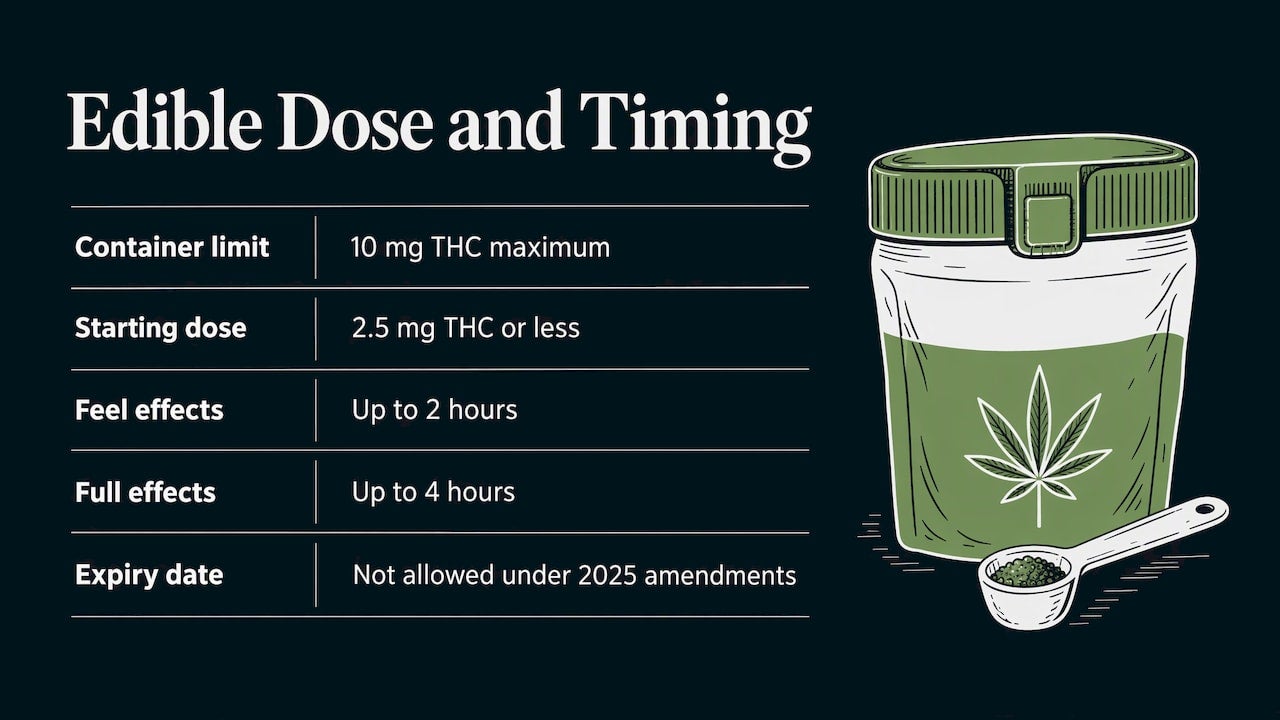
Top shelf edibles are defined by accuracy: the dose on the package is the dose in every piece. In Canada, an edible container cannot legally hold more than 10 mg THC, and edibles cannot carry expiry dates under the 2025 amendments, as the Canada Gazette records. The same CCMOH statement recommends starting with 2.5 mg THC or less, waiting up to two hours to feel effects and up to four hours for full effects before taking more, and storing edibles in labelled, child-resistant packaging away from food, children and pets. If you want to understand stronger products, we wrote a guide to high dose THC edibles in Canada. New to cannabis or worried about feeling anxious? Our guide to choosing marijuana for anxiety walks through picking carefully.
If you have a medical condition, take prescription medication or are pregnant or breastfeeding, talk to your doctor or pharmacist before using cannabis.
A short checklist before you buy
- Confirm the excise stamp, health warning box and THC symbol.
- Read total THC and total CBD, and compare them across similar products.
- Check the packaging date and lot number.
- Look for terpene or lab information, including a QR code if one is printed.
- Compare price per gram within the same tier.
- For edibles and vapes, pick a dose you can start low with.
- Store everything sealed and out of reach of children.
Our perspective
We started Toke Club in 2018 because Canadians who wanted legal cannabis deserved an easy way to find products they could trust at fair prices. Over the years, we have seen how much the word “top shelf” gets stretched. Our view is simple: a tier name should mean something you can check.
That is why we put flower, vapes, concentrates, edibles and topicals in clear categories, with the product information in front of you, and why we sell products that carry the legal markings Health Canada requires. We want you to compare THC levels, formats and prices on one site, and to leave your cart knowing what you chose and why.
We also built a loyalty program so that choosing carefully pays off: you earn credits on purchases and get extra rewards for signing up. Our aim is to supply a wide selection with visible savings, so that quality is not a luxury item.
the author
Where to start at Toke Club
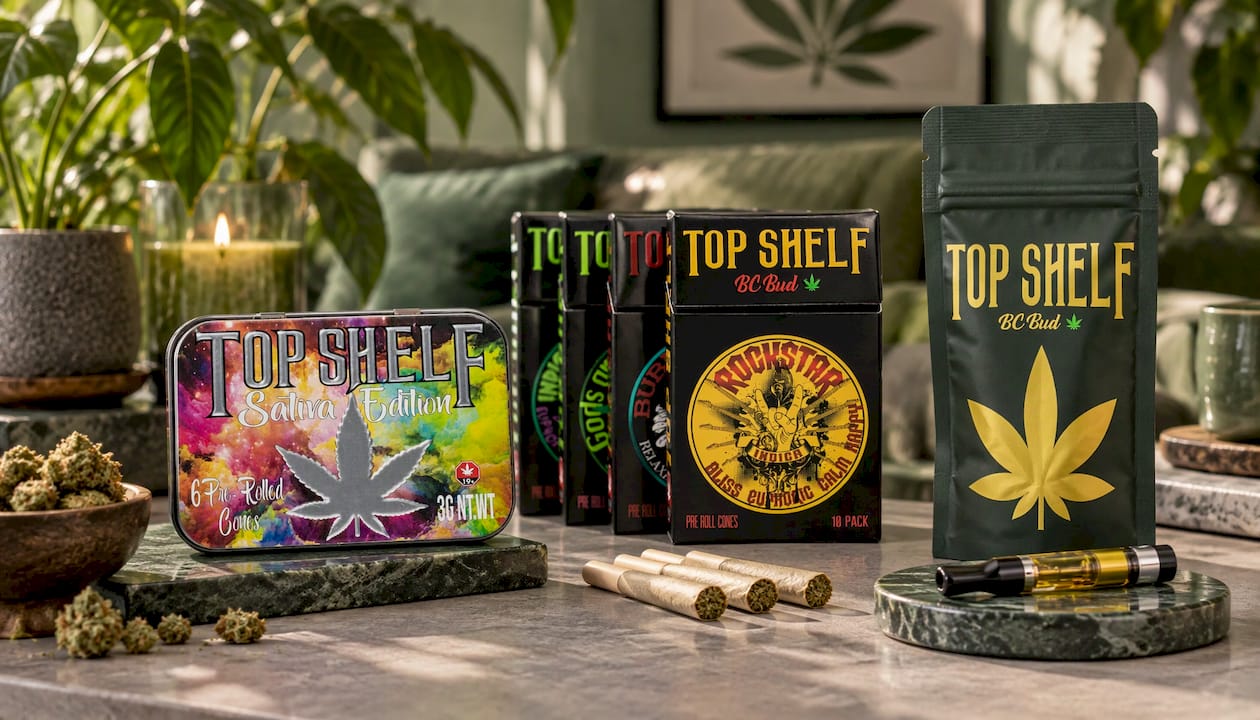
If you want to try the top-shelf tier, we carry Top Shelf 0.5 Grams Pre-Rolls (10-Pack) and the Top Shelf Pre-Roll Variety Pack Tin for easy sampling, plus loose premium flower for people who prefer to grind their own. Prefer something smokeless? Browse our edibles. Orders over $200 ship free, and you can see everything in the full shop.
You must be an adult of legal age in your province or territory to order.
FAQ
Is top shelf weed an official grade in Canada?
No. Health Canada sets rules for testing, packaging and labelling, but it does not define “top shelf” or certify letter grades like AAAA. The term describes the highest tier a seller carries, and the label and lab information are what you should rely on.
What is the difference between top shelf and exotic weed?
Top shelf is a place on a menu and a price tier. Exotic describes the flower itself, usually unusual genetics or a distinctive aroma. Neither term has a regulatory meaning in Canada, so check total THC, terpene information and the date instead.
What strain is top shelf?
No strain is top shelf by name. Any strain can be top of the menu if the batch is well grown, dried and cured. Judge the specific batch by aroma, structure, date and lab information, not by whether it is an OG or any other famous name.
Does a higher price mean better weed?
Not automatically. Price reflects the tier and the supply, and larger packages usually cost less per gram. Compare price per gram within the same tier, and look for something that justifies a premium, such as a recent date or detailed terpene information.
Sources
- Reduce your risk: Choose legal cannabis, Health Canada
- How to read and understand a cannabis product label, Health Canada
- Summary of changes following the streamlining of cannabis regulations, Health Canada
- Canada Gazette, Part 2, Volume 159, Number 6: SOR/2025-43
- CCMOH statement on cannabis extracts, edibles and topical products
- Weed slang glossary, WeedDB
- How to Evaluate Cannabis Flower Quality
- Self-reported cannabis prices in Canada, Drug and Alcohol Review (2025)
Recommended
- West Coast Bud: What the Name Means and How to Buy Quality Flower in Canada
- Outdoor-Grown Cannabis in Canada: What It Is and How to Buy It
- Weed Delivery in Canada | Buy Weed Online
- High Dose THC Edibles in Canada: What Counts and How to Use Them