
Cannabis for Health
Vape Battery Charging: A Safe, Simple Guide for Canadians
Nov
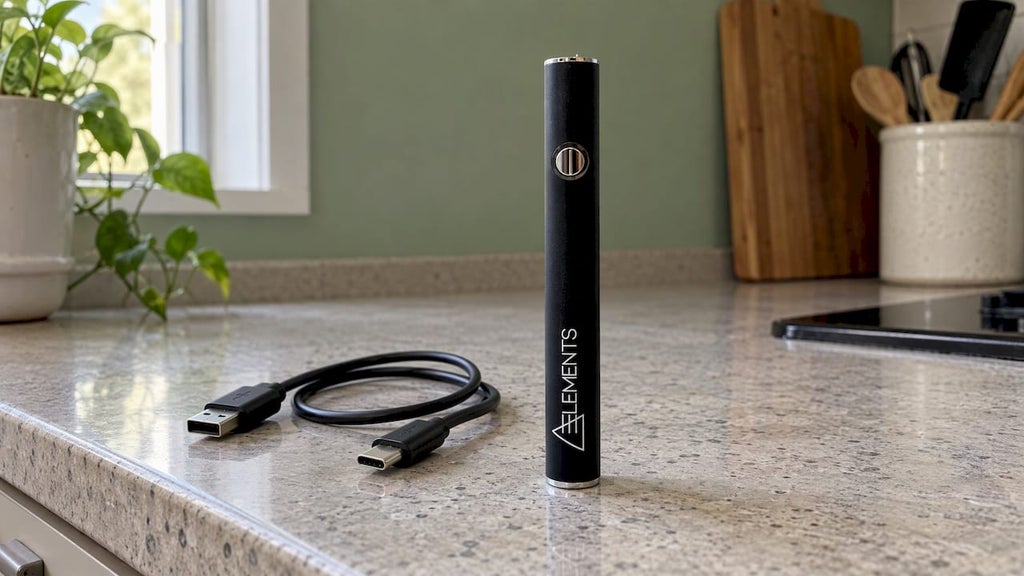
Charge a vape battery with the cable or charger made for it, at room temperature, where you can see it, and unplug it once it is full. That covers most of it. The rest is knowing what the indicator light means, when to top up, and what to do when a battery acts strangely. Whether you run a rechargeable 510-thread pen battery with your THC cartridges or a rechargeable disposable, the same habits keep the battery healthy and your home safe. If you are choosing a battery to pair with your carts, our rechargeable vape batteries are a good place to start.
TL;DR
- Use the charger or cable that came with your device, and follow the manufacturer’s instructions and charging time. Health Canada says never to exceed the recommended time.
- Charge on a hard, open surface at room temperature, within sight, and away from exit doors.
- Most small pen batteries charge in well under two hours. Check your device’s own guide for the exact time and light signals.
- Stop using any battery that is swollen, dented, torn, or hot to the touch while charging.
- Store a battery partly to fully charged, not drained flat, and top it up every few weeks if it sits unused.
Table of Contents
- What kind of vape battery do you have?
- How to charge a vape battery step by step
- Where and how to charge safely
- How long does a vape battery take to charge?
- How to tell if it is charging or full
- When to recharge and how to stretch battery life
- When a vape battery will not charge
- What the rules say in Canada
- Choosing a battery that is easy to live with
- Get the battery and the cart in one order
- FAQ
- Sources
What kind of vape battery do you have?
Charging depends on the device, so start by identifying yours. Three types cover nearly every cannabis vape sold in Canada.
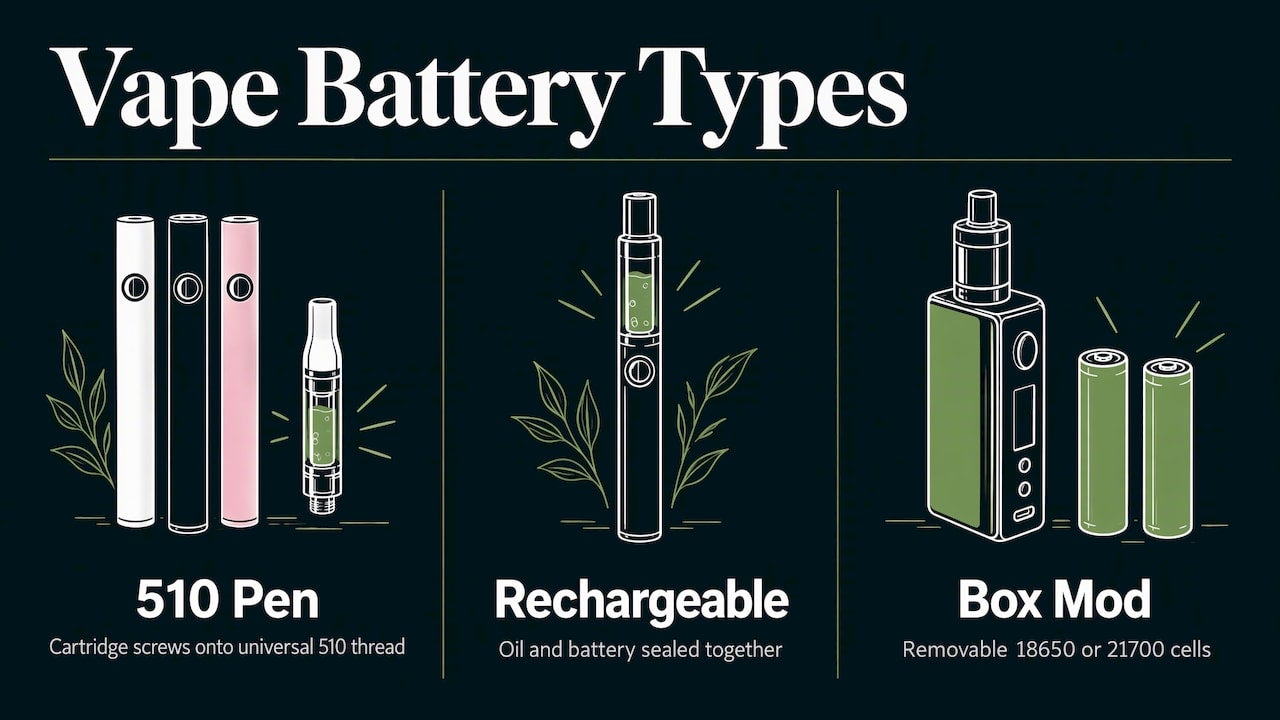
510-thread pen batteries. These are the most common. A standard cartridge screws onto the battery by its 510 thread, a universal connector. The battery has its own charging port (usually USB-C or micro USB) or screws onto a small charging cable. You charge the battery alone, with the cartridge removed.
Rechargeable disposables. These are all-in-one pens with oil and battery sealed together. Many have a charging port so the battery can outlast the oil. You charge them the same way, but you cannot swap the battery.
Box mods and larger devices. These use removable cells, often 18650 or 21700 format, charged in an external charger. They are less common for cannabis oil and have their own rules, mainly: use the matching charger and never leave loose cells unprotected.
If you are not sure which you have, check the packaging or the port. A small USB port on the bottom or side means it charges through a cable. A thread on the bottom means it likely charges on a thread-style charger.
How to charge a vape battery step by step
The routine is short. Each step has a way it goes wrong.
1. Check the level and remove the cartridge
Take the cartridge off a 510 battery before you charge. It keeps oil away from the heat and contacts, and it keeps the charging connection clean. A battery with a fully loaded cartridge sitting on a warm charger is the easiest way to make a mess.
2. Use the right cable
Use the cable supplied with the device or one made for it. Health Canada’s vaping product safety guidance tells users to follow the manufacturer’s recharging instructions and to buy batteries recommended by the vape manufacturer from a trusted source. A random cable from a drawer may fit the port and still deliver the wrong current.
For the wall end, a standard phone-type adapter is what most pen batteries are designed around. Fast chargers built for laptops or tablets are not what a tiny pen battery expects, so if your device’s guide names an adapter, use that one.
3. Plug in and watch the light
Most pen batteries show charging with an indicator light. The colour and pattern vary by device, so use the guide that came in the box. Typically one pattern means charging and another, or no light at all, means full. Learn your own device’s signals once and you will not have to guess.
4. Unplug when full
Do not leave a battery plugged in overnight out of habit. Health Canada warns in its lithium-ion battery safety guide that overcharging can overheat lithium-ion batteries and lead to fires or explosions. Many modern devices include protection, but the safest habit costs nothing: charge, then unplug.
5. Reattach the cartridge
Once the battery is full and cool, screw the cartridge back on, finger-tight only. Over-tightening can damage the thread and the connection.
Where and how to charge safely
The place you charge matters as much as the cable. Health Canada’s lithium-ion guidance advises charging at room temperature, where the device is visible, away from soft surfaces that trap heat and away from exit doors.
In practice:
- Use a hard surface. A kitchen counter, desk or tile floor beats a couch, bed or pillow, which trap heat.
- Stay in the room, or at least in earshot. Charging a vape while you are asleep or out removes your chance to notice a problem early.
- Keep it away from exits. If a battery ever fails, you do not want it blocking your way out.
- Avoid heat and cold. Do not charge in a hot car, on a sunny windowsill or next to a heater. Do not bring a freezing battery straight onto a charger either; let it reach room temperature first.
- Keep spares protected. Health Canada recommends a protective case for spare cells, so they do not touch keys, coins or each other in a pocket or bag.
A hot battery is a signal, not a quirk. If it is too hot to hold comfortably, unplug it and move it to a hard, non-flammable surface.
How long does a vape battery take to charge?
There is no single number, because capacity and charging current differ from device to device. As a rough guide, small pen batteries of a few hundred milliamp-hours (mAh, a measure of battery capacity) tend to fill much faster than larger devices with several times the capacity. The honest answer is the one in your device’s guide, and Health Canada’s rule is to follow the manufacturer’s recommended charging time and never go past it.
A few things change how long it takes:
- Battery capacity. A bigger battery holds more, so it takes longer.
- The cable and adapter. A weak adapter or a worn cable slows charging noticeably.
- How empty it was. Topping up from half is quicker than filling from flat.
- Temperature. Charging in a cold or hot room is slower and harder on the cell.
If a battery that used to fill quickly now takes far longer, or dies within minutes, that is a sign of age or damage rather than a charging problem.
How to tell if it is charging or full
Look for three things.
- The indicator light. Most devices use a blinking or coloured light while charging and a solid, different-coloured or switched-off light when full. Your guide lists the exact pattern.
- The feel. A battery should be at most mildly warm. Noticeable heat is a reason to unplug.
- Time. If you have passed the recommended time and it still shows charging, unplug it and try a different cable and wall adapter.
A button-activated battery with no charging light is harder to read. In that case, rely on the manufacturer’s time estimate and test with a short session after unplugging.
When to recharge and how to stretch battery life
Vape battery life depends on how often and how hard you use it. A small pen battery used for occasional sessions can last days between charges. Heavy use or a high voltage setting drains it much faster.
Habits that help any lithium-ion battery last:
- Top up before it is flat. Deep discharges wear the cell. Recharging when it is low is better than running it until it dies.
- Avoid constant 100% storage and constant 0%. For longer storage, keep it partly charged in a cool, dry place and top it up every few weeks.
- Use a lower voltage when you can. Variable-voltage batteries use more power at higher settings. A gentler setting also tends to taste better with cannabis oil and wastes less.
- Keep contacts clean. Oil residue on the 510 thread or the charging port can stop a charge from completing. Wipe gently with a dry cotton swab.
- Charge at normal room temperature. Heat is the biggest long-term enemy of battery capacity.
Our guide on how to properly store and preserve your cannabis products also covers the cool, dark conditions that suit your cartridges while the battery rests.
When a vape battery will not charge
Work through the simple fixes in this order.
- Try another cable and another power source. A different wall adapter or a different outlet rules out the two most common faults.
- Clean the contacts. Use a dry cotton swab, a toothpick or a clean dry brush on the charging port or thread, and on the matching contacts of the charger. Do not use liquids.
- Check the temperature. Many batteries will refuse to charge when they are very cold or hot. Let the device come to room temperature and try again.
- Reseat the connection. Unplug, wait a minute, and plug in again. For a thread charger, screw it on gently, not tight.
- Contact the seller or manufacturer. If it still fails, a product may be faulty.
If you bought from us, reach us through the site. Health Canada also says you can report a product safety problem to the manufacturer or retailer, or through its consumer product safety online reporting page.
Signs to stop using the battery
Some signs mean the battery is finished, not fixable. Health Canada’s lithium-ion guidance says to stop using cells that are swollen, dented, have torn wrappers or otherwise show damage or wear. Add to that list a battery that gets very hot while charging, smells odd or leaks. Unplug it, put it on a hard, non-flammable surface away from anything that burns, and do not try to charge or repair it. Dispose of it at a battery recycling drop-off rather than in household garbage or recycling.
What the rules say in Canada
If you wonder whether a federal charging standard exists, here is the current picture. Health Canada’s notice of intent on lithium-ion batteries states that there are currently no specific Canadian regulatory requirements for lithium-ion batteries. It proposes developing mandatory safety requirements for batteries and consumer products under the Canada Consumer Product Safety Act, and a pre-consultation on that proposal ran from December 2, 2025 to February 14, 2026. A proposal is not a rule in force, so for now the practical guidance is the one above: manufacturer instructions, sensible placement, and attention to damage.
The press has covered the issue as well. Daily Hive reported in August 2026 that lithium-ion battery fires are rising across Canada and that Health Canada was considering new safety requirements. The takeaway for a vape user is simple: the device is small, but the battery inside it is the same kind found in phones and e-bikes, and it deserves the same care.
Choosing a battery that is easy to live with
A good battery is one that matches your cartridges and fits your routine. Three questions decide it:
- Is it 510-thread? That is the connector most THC cartridges use. Browse our THC and CBD cartridges and pair them with a battery of the same standard.
- How do you charge it? A built-in port with a cable is the simplest. Look for a battery that comes with its own charging cable.
- Do you want to charge at all? If you would rather not manage a battery, disposable vapes come ready to use.
If you are new to vaping cannabis, our THC vape guide for Canada explains the types, flavours and legal limits so the battery is not your only decision.
What we think about charging
We have sold cannabis to Canadians online since 2018, and the battery is the part of a vape that people think about least and notice most. A cartridge is only as good as the power behind it. Our view is that the best session starts with a battery you trust: one matched to your cartridge, charged with its own cable, and unplugged when it is full.
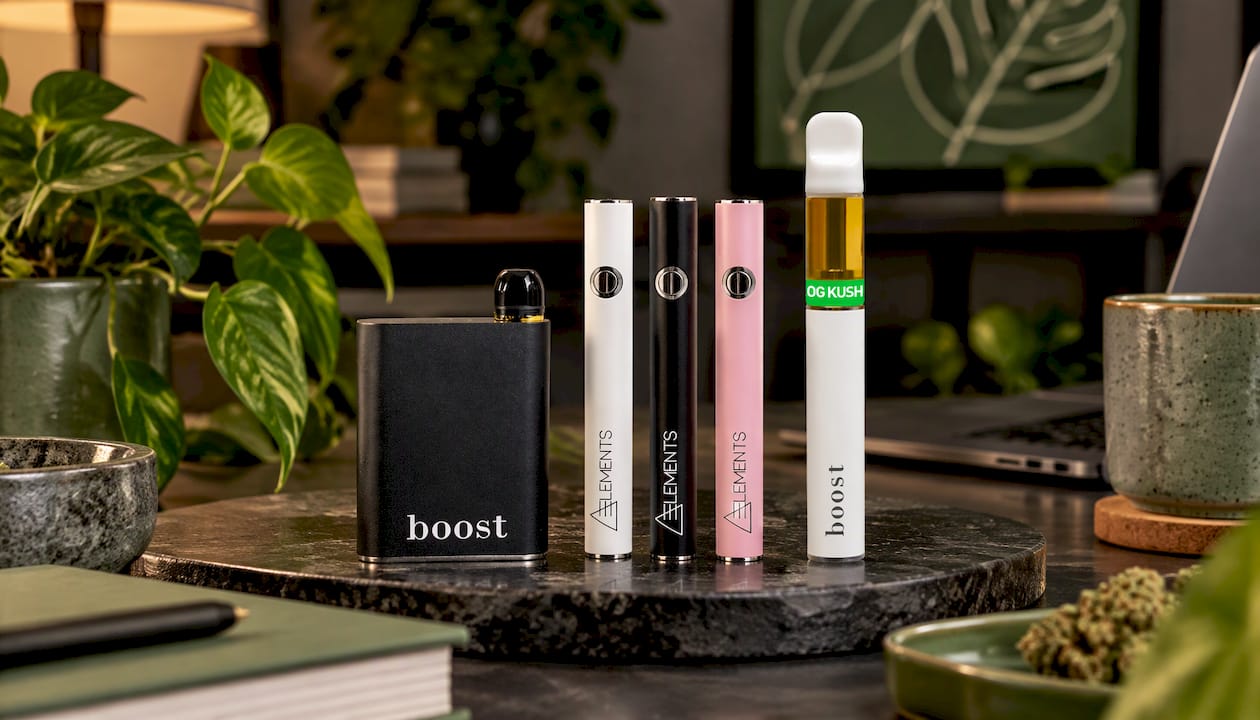
That is why we carry rechargeable batteries next to our carts, so you can pick a pair that works together. Our Boost and Elements batteries sit in the same category as the carts and disposables they are made to power, and shopping them together keeps the choice simple. We also run a loyalty program that earns credits on purchases, so the battery you buy today can help pay for your next cartridge.
Charge it like you would any lithium-ion device, and enjoy the cartridge you came for.
the author
Get the battery and the cart in one order
If your battery is aging or you are starting fresh, our vapes collection puts rechargeable batteries, THC and CBD cartridges and disposables in one place for Canadian adults. The Boost vape battery and the Elements rechargeable battery are two places to begin.
You earn loyalty credits on purchases, and rewards on sign-up, so a new battery and a fresh cartridge can go into the same order.
FAQ
How do I tell if my vape battery is charging?
Check the indicator light, which on most devices blinks or changes colour while charging. The exact pattern is in your device’s guide. If there is no light, the battery should feel at most slightly warm, and a hot battery should be unplugged at once.
How long should a vape battery take to charge?
It depends on the capacity of the battery and the charging current, so follow the time your manufacturer gives. Health Canada’s advice is to follow the manufacturer’s recharging instructions and never exceed the recommended charging time. Small pen batteries generally fill faster than larger devices.
At what percentage should I recharge my vape?
Top it up when it is low rather than running it flat, because deep discharges wear a lithium-ion cell faster. You do not need to wait for an exact number. For storage, keep it partly charged and recharge it every few weeks.
Can I charge my vape from a laptop or power bank?
A wall adapter with the supplied cable is the safest choice, and it is what most manufacturers specify. If your device’s guide permits another source, follow it. If the battery will not charge, try a different cable and outlet first.
Is it safe to charge a vape overnight?
It is best not to. Overcharging can overheat lithium-ion batteries, according to Health Canada, and you would not be awake to notice a problem. Charge while you are nearby, then unplug.
Sources
- Vaping product safety, Health Canada
- Lithium-ion battery safety, Health Canada
- Notice of intent on proposed lithium-ion battery requirements, Health Canada
- Lithium-ion battery fires on the rise across Canada, Daily Hive
Recommended
- THC Vape Guide for Canada: Types, Flavors, Legal Limits
- Live Resin vs. Distillate: How to Choose in Canada